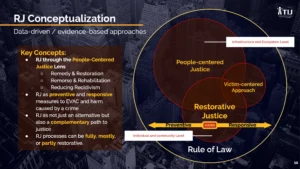

Thailand continues to face significant challenges related to prison overcrowding, with inmate numbers exceeding system capacity and a large proportion involving minor and juvenile offences. These structural pressures highlight the urgent need for alternative approaches that prioritise rehabilitation, reintegration, and social harmony. In this context, restorative justice (RJ) emerges as a critical mechanism for addressing harm, reducing reoffending, and strengthening community-based responses to crime.
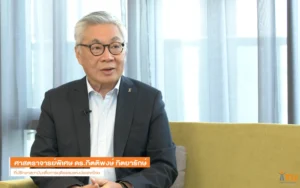
As highlighted by Prof. Dr. Kittipong Kittayarak, Executive Director of the Thailand Institute of Justice (TIJ), restorative justice seeks to build trust and shared responsibility among victims, offenders, and communities, offering a constructive pathway beyond punitive approaches. RJ places emphasis on accountability, healing, and participation, while also providing opportunities for offenders—particularly young people—to rebuild their lives and reintegrate into society.
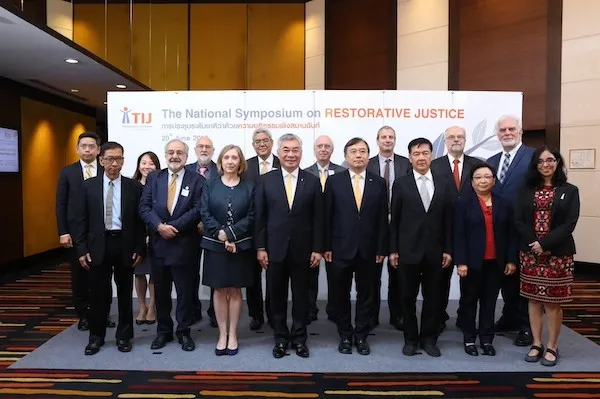
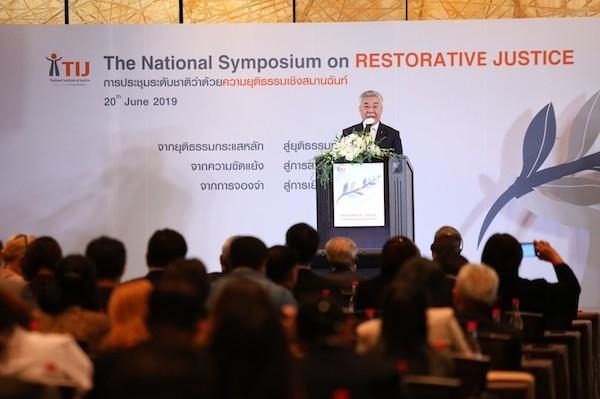
To advance this agenda, TIJ continues to work closely with the United Nations Office on Drugs and Crime (UNODC), including support for the development of the updated UNODC Handbook on Restorative Justice Programmes. As part of this initiative, TIJ convened the Expert Group Meeting (17–19 June 2019) and hosted the National Symposium on Restorative Justice on 20 June 2019, bringing together more than 200 participants from across the criminal justice system and over 10 international experts.
The Symposium provided a platform to exchange knowledge and good practices across three key areas:
- Understanding restorative justice approaches and principles,
- Translating RJ from principles into practical implementation, and
- Sharing experiences, opportunities, and challenges from diverse national and international contexts.
Key speakers included representatives from UNODC, the judiciary, academia, and international justice institutions, who collectively contributed to advancing dialogue on how restorative justice can be effectively integrated into justice systems.

Through these efforts, TIJ reinforces its role as a knowledge hub bridging international standards and national practice, while promoting restorative justice as a foundation for a safer, more inclusive, and sustainable society grounded in the rule of law and shared responsibility.